Building date: Destroyed by fire April 22, 1931
Original use:
Corner structures:
Mortar application and content:
Types and uses of stones:
Types and choice of windows:
Structures with similar masonry details:
Masons who worked on building:
Unique features:
Map views courtesy Google Maps.
Town of Geneva and Ontario County Maps
Street address or exact location is unknown.
This house was located on Billsboro Road, south of Geneva. It was destroyed by fire on April 22, 1931. Richard Palmer blog.
Tenant House on W.A. White Farm Burned Today, Geneva Daily Times, Wednesday, April 22, 1931
Billsboro, April 22. - The old cobblestone house and its contents on the farm of Willis A. White was totally destroyed by fire during the noon hour today. The flames spread with such rapidity that nothing in the house was saved.
An alarm was sent to Geneva and the chemical truck responded and assisted in saving nearby buildings.
The house was occupied by the family of Abe Covert, who works on the White farm. Other accommodations will be provided for the tenant. The house was considered to be more than 100 years old.
A second call for assistance was received at the Hydrant hose house at 3 p.m. and again the apparatus was sent out to the farm. It was reported that the fire had again broken out and owing to a change in the wind the barns were endangered.
Beautiful Old Mansion Destroyed
Cobblestone House on W.A. White Farm Burned Yesterday Noon, Geneva Daily Times, Thursday, April 23, 1931
The fire which destroyed the old landmark on the hill overlooking Seneca Lake at Billsboro Wednesday noon removed one of the oldest structures in the lake country and one on which the utmost endeavors of the builders had been expended a century or more ago.
Situated on the farm now owned by Willis A. White and occupied by Mr. and Mrs. Abraham Covert, the building was a little off the accepted line of travel and not so well known by the traveling public as those similarly constructed houses that stand on the improved highways.
The fire broke out while the occupants were eating dinner and was first seen sweeping over the shingled roof by Mr. Covert when he went into the yard after hearing unusual sounds. Fanned by a brisk southeast wind, the flames were carried away from the other buildings but embers set fire to trees standing in the orchard some distance away. There was no chance to save the structure and Mr. Covert first devoted his attention to saving a quantity of seed beans that Mr. White had stored in the house before the planting season. A small amount of furniture was also taken out but this was insignificant.
The fire department from Geneva responded to a call but the roof had fallen in when they arrived and the intense heat made it impossible to approach the ruins. Later in the afternoon the wind changed slightly and sparks coming from the burning inferno confined within the massive walls threatened the barns so the pumper again went to the scene.
By this time it was possible to approach a cistern near the house into which the suction hose was dropped and with the resulting stream, the outbuildings were protected.
A view of the ruins today shows the outer walls of a once beautiful structure about 36 by 50 feet still gutted. The architecture was somewhat peculiar in that there were no windows on the sides of the second story, although there were three rooms on the second floor, the two end ones obtaining light from windows in the gable, while the central one was lighted by a round window in the center of the southern room.
A cobblestone addition contained a side entrance and dining room was built with equal care, and a wide porch with Colonial pillars extended two-thirds across the front, its roof being a continuation of that which covered the building.
The cost of the structure cannot be estimated but it is a safe guess that fifteen or twenty thousand dollars would be required to replace it, even with the stones on the scene. The interior finish was unusual, also the door and window casings being carved and railings being hand carved and an entrancing fireplace gracing the western end of the huge living room which faced the south.
Mr. Covert is now quartered in a smaller tenant house on the property and will continue to operate the farm. Mr. White states there was a partial insurance on the building. Richard Palmer blog.
"The Cobblestone Houses of Upstate New York", compiled by Dorothy Wells Pease. Research done in collaboration with Hazel B. Jeffery, supplemented with material furnished by Carl F. Schmidt, 1941. Reference the fourth paragraph on page 22.
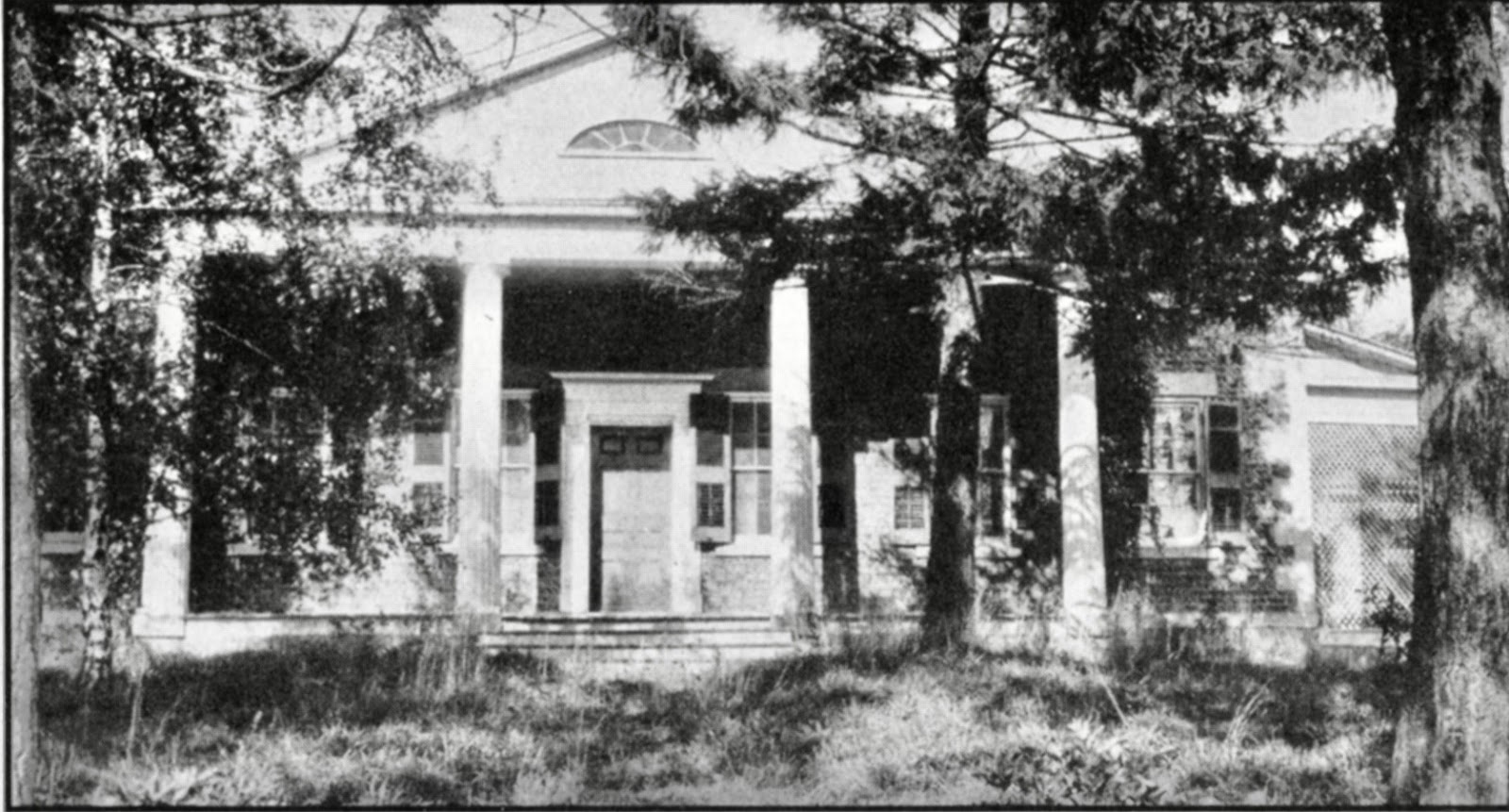 Armstrong house.jpg ¹ Caption: All dignity and aloofness - exactly the kind of a house that ought to have produced a great statesman or a president. The farmhouse of Mr. W. A. White, Geneva, N.Y. |
¹ Image provided by Richard Palmer blog.
